With game time fast approaching (10:00 AM, 10/10/10) it seemed opportune to scout some of the opposing rosters. Being the premier junior event of 2010, very few of the teams can be taken lightly. Certainly, though, some are far more dangerous than others. Roster personnel can be found here.
So, who should you look out for?
Certainly two teams that jump off the page are France and Israel.
France - Headlined by Thomas Bessis -- perhaps inarguably the most successful junior in the world over the past year having won this year's Vanderbilt and finished 4th in the prestigious Cavendish Invitational Pairs -- this team appears to be deadly. Nicolas Lhuissier finished 3rd in the World Junior Paris in 2009 and Cristophe Grosset is a former European Junior Champion and fresh off a 2nd place finish at the recent FISU championships. He'll partner rising French youngster and FISU teammate, Cedric Lorenzini.
Israel - By far the most experienced team in the field, Israel sports 43 years combined junior-team membership between 6 players. Mostly comprised of the 2006 FISU championship team, Israel finished 2nd in the last European Junior Team Championships. Top to bottom, hardly a weak link.
Wild Cards - The rest of the field contains some very good players, but also some all stars, Junior status aside. Andy Hung's Aussie squad can be counted on to win a match at any time, as can former-European-Open-Champion Espen Lindqvist's Norwegians.
The next month will probably draw out quite stressfully as Jason and I prepare and try to get to a level where we could possibly defeat all these teams. Hopefully I'll feel much more calm once the action starts like in prior years. I received word from Captain Kevin Wilson yesterday that Jason and I will likely be in for our first match vs. USA2, a team that may boast the best partnership in the tournament of Owen Lien-Zach Brescoll. It helps to know when our campaign will start... but only slightly.
Thursday, September 2, 2010


Starting Six
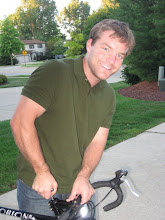
Time to meet your starting six for Philadelphia. Pictures included are as ferocious as could be found.
 |
| Dan Wolkowitz - Polymath, Harvard graduate and current teacher, Dan and Marius have shot onto the scene this year some good results in recent NABC+ events, including a 30th place finish in the Werner Open Pairs in New Orleans. |
 |
| Marius Agica - Dan's partner. Marius just turned 21, which hopefully won't negatively affect his Philadelphia performance too much. Marius is studying computer science at Pace University. |
 |
| Roger Lee - Roger was my partner the last time I played this event (World Junior Championships, Ortiz-Patiño Trophy). Roger recently graduated from Cal Tech and has enjoyed many high-place finishes in recent NABC+ events. These include, 8th in the 2010 Werner Open Pairs, 16th in the 2010 Fast Open Pairs, |
 |
| Jeremy Fournier - A junior-team staple since 2004, Jeremy is a Tennessee alum. Currently employed by Bob Hamman, he had no problem finding time off to compete in a bridge event. A big clubber at heart, he and Roger will be playing 2/1 in Philly and hopefully lead our team into the KOs. A true Renaissance Man! |
 |
| Jason Chiu - Avid wine enthusiast and current partner of yours truly, Jason is a superb card player from Wyoming. Currently employed by Deloitte Consulting, Jason graduated from MIT at the ripe old age of 19 with degrees in engineering and mathematics. "ch00bacca" has enjoyed many successes playing on teams with Kenny Gee and employs an old-fashioned -- to say the least -- 2/1 style that lends itself to very few misunderstandings. |
 |
| Kevin Fay - Your humble blogger. If you're reading this, you probably already know me. Possibly not the best bridge player around, but driven by an unquenchable desire to excel at all endeavors and win. With such prestigious almae maters as this team boasts, KFay is proud to have attended the most famous and successful, the University of Michigan. |
Wednesday, August 25, 2010
Mandatory Falsecard
I played in a junior match today with ch00 that was especially fun because we were treated with great teammates... Roger Lee and Jeremy Fournier, another pair for or squad in Philadelphia.
Here is a slam hand from the match that contained a fairly common theme:
Take note of Roger's nice play of the Spade Nine on the first round of trumps. This gave North, Dana Berkowitz, a chance to misplay the suit by crossing to hand and finessing East out of a hypothetical initial holding of Jxxx, which resulted in a swing for our team when Jason made an overtrick. So what's the correct play?
The answer to this question--like many--is: it depends. If Roger Lee is sitting West, then you should play him to have started with an initial holding of J9xx. The reason is that a good player sitting in the West seat will always play the nine on the first round of trumps in this position, otherwise you can hardly go wrong. J9xx is exactly 3 times as likely an initial holding as stiff 9 since there are 3 ways West can hold J9xx and only one way they can hold a singleton 9; therefore, it's 3 times more likely that they're playing the 9 from J9xx. If a poor player is sitting West, however, then it's correct to play East for Jxxx since West would probably never find the falsecard even though this is the quintessential mandatory falsecard position. If the caliber of the player is somewhere in between, then you have to judge whether West will find the play of the 9 from J9xx more than 33% of the time before you can determine the correct play.
Nice play, Roger!
Here is a slam hand from the match that contained a fairly common theme:
Take note of Roger's nice play of the Spade Nine on the first round of trumps. This gave North, Dana Berkowitz, a chance to misplay the suit by crossing to hand and finessing East out of a hypothetical initial holding of Jxxx, which resulted in a swing for our team when Jason made an overtrick. So what's the correct play?
The answer to this question--like many--is: it depends. If Roger Lee is sitting West, then you should play him to have started with an initial holding of J9xx. The reason is that a good player sitting in the West seat will always play the nine on the first round of trumps in this position, otherwise you can hardly go wrong. J9xx is exactly 3 times as likely an initial holding as stiff 9 since there are 3 ways West can hold J9xx and only one way they can hold a singleton 9; therefore, it's 3 times more likely that they're playing the 9 from J9xx. If a poor player is sitting West, however, then it's correct to play East for Jxxx since West would probably never find the falsecard even though this is the quintessential mandatory falsecard position. If the caliber of the player is somewhere in between, then you have to judge whether West will find the play of the 9 from J9xx more than 33% of the time before you can determine the correct play.
Nice play, Roger!
Monday, August 23, 2010
Challenge the Champs
Jason and I haven't been playing many hands lately. However, we have had the opportunity to bid a few Challenge the Champs hands, which are good practice to help straighten out the few areas that need straightening in a simplistic system such as ours.
Some time ago I was lucky enough to come into possession of a collection of old Bridge Worlds. I had some duplicates and sent them along to Jason. The current batch of hands we've been working on come from 1978. Contestants include Becker-Rubin, Hayden-Kasle, the couple Capplletti, Woolsey-Robinson, Hamman-Wolff and Kemp-Rapaport (who had a nice run this year). This is from the period where the champs actually stayed on until they were defeated. The Master Solvers' Club panel was comprised of Billy Eisenberg, Edwin Kantar, Theodore Lightner, Marshall Miles, Richard Pavlicek, Alvin Roth, Ira Rubin and stalwart Carl Hudecek, amongst others.
Here are a few of kf00's travails from May '78.
Here is a hand where I need to have better judgment to make up for our partnership's lack of bidding agreements. The hand is centered around one card, the queen of spades. The top spot is 7S (which will succeed against no diamond ruff and spades 4-2 or better), but Jason and I arrived in 6D like both the contestant pairs, which was worth 5/10 Matchpoints. To make a long story short, if Jason doesn't have the spade queen we might very well be too high already. The contract's prospects most likely hinge upon whether he is 3163 or 2164. As such, I should probably bid either 6NT--in which I can count 12 tricks slightly more than 50% with the former distribution--or 6S, looking for grand if Jason does have the spade queen. I argued that perhaps Jason should have bid more, since I know he doesn't have the king of clubs by his failure to bid 4C when afforded the opportunity. I'm sure he knows the queen of spades is a very key card, but it may not be enough in his eyes to go higher.
Some time ago I was lucky enough to come into possession of a collection of old Bridge Worlds. I had some duplicates and sent them along to Jason. The current batch of hands we've been working on come from 1978. Contestants include Becker-Rubin, Hayden-Kasle, the couple Capplletti, Woolsey-Robinson, Hamman-Wolff and Kemp-Rapaport (who had a nice run this year). This is from the period where the champs actually stayed on until they were defeated. The Master Solvers' Club panel was comprised of Billy Eisenberg, Edwin Kantar, Theodore Lightner, Marshall Miles, Richard Pavlicek, Alvin Roth, Ira Rubin and stalwart Carl Hudecek, amongst others.
Here are a few of kf00's travails from May '78.
Here is a hand where I need to have better judgment to make up for our partnership's lack of bidding agreements. The hand is centered around one card, the queen of spades. The top spot is 7S (which will succeed against no diamond ruff and spades 4-2 or better), but Jason and I arrived in 6D like both the contestant pairs, which was worth 5/10 Matchpoints. To make a long story short, if Jason doesn't have the spade queen we might very well be too high already. The contract's prospects most likely hinge upon whether he is 3163 or 2164. As such, I should probably bid either 6NT--in which I can count 12 tricks slightly more than 50% with the former distribution--or 6S, looking for grand if Jason does have the spade queen. I argued that perhaps Jason should have bid more, since I know he doesn't have the king of clubs by his failure to bid 4C when afforded the opportunity. I'm sure he knows the queen of spades is a very key card, but it may not be enough in his eyes to go higher.
The Fall of The Junior
Summer's coming to a close and the contest for the Ortiz-Patino trophy is less than 50 days away. This fall will be my last as a junior playing for the USA. It's been four years the the United States has won a Junior Championship. What else can I say? I want to win.
Jason and I finished putting together our WBF Convention Card last night. For anyone who's interested in seeing what a WBF CC looks like, you can find ours here. There are many features about the WBF card that are far superior to the ACBL convention card, in my opinion. These include:
1) A section for bids the opponents absolutely must know about.
2) A note about psychic tendencies (gasp!)
3) An extensive section on defensive carding, an area that is very poor on the ACBL card
4) Stress on defensive and competitive bidding.
5) Easy chart for common, uncontested sequences
6) The encouragement of including supplementary notes.
Items 3 and 4, especially, are key, in my opinion. These are the calls that opponents actually need to know during an auction in which they intend on bidding. Half of the ACBL card, it seems, is essentially a template for players to brag about how many conventions they play. These are bids that can easily be explained at the conclusion of the auction.
You'll notice that nearly the entire WBF card is devoid of an area in which you can tell everyone you play the latest Bergen gadget, or how many artificial ways you have to raise partner. It's not about conventions, it's about bridge.
Jason and I finished putting together our WBF Convention Card last night. For anyone who's interested in seeing what a WBF CC looks like, you can find ours here. There are many features about the WBF card that are far superior to the ACBL convention card, in my opinion. These include:
1) A section for bids the opponents absolutely must know about.
2) A note about psychic tendencies (gasp!)
3) An extensive section on defensive carding, an area that is very poor on the ACBL card
4) Stress on defensive and competitive bidding.
5) Easy chart for common, uncontested sequences
6) The encouragement of including supplementary notes.
Items 3 and 4, especially, are key, in my opinion. These are the calls that opponents actually need to know during an auction in which they intend on bidding. Half of the ACBL card, it seems, is essentially a template for players to brag about how many conventions they play. These are bids that can easily be explained at the conclusion of the auction.
You'll notice that nearly the entire WBF card is devoid of an area in which you can tell everyone you play the latest Bergen gadget, or how many artificial ways you have to raise partner. It's not about conventions, it's about bridge.
Subscribe to:
Posts (Atom)